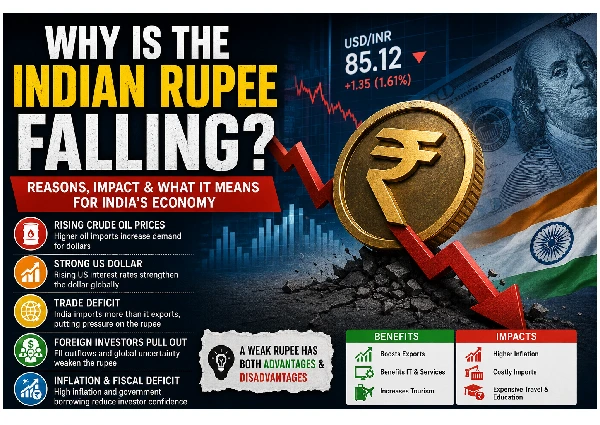
The rupee of India (INR) has been under constant pressure from the US Dollar over the years. Every time the rupee is weaker the news media begin to talk about the rising cost of imports, inflation as well as economic uncertainty and global economic developments. What is the reason behind why the Indian rupee declining? Does it have to do with the economic situation in India, or are global forces equally to blame?
This blog will discuss the main reasons for the declining value of the Indian rupee, and how it affects both business and people, and whether the weakening of the rupee is detrimental to the economy.
Understanding Currency Value
Before we get into the details it’s crucial to know the way that currencies function.
The value of a currency is based mostly on:
- Supply and demand on international markets
- Economic expansion
- Inflation levels
- Rates of interest
- Foreign investments
- Stability in the political system
- Trade balance
If the demand for the US Dollar rises compared to the Indian Rupee, the rupee falls. As an example:
- Earlier: $1 = Rs70
- Later: $1 = Rs85
The rupee has appreciated since more rupees are required to purchase a US dollar.
Major Reasons Why the Indian Rupee Is Falling
1. Strengthening of the US Dollar
One of the major factors behind the fall of the rupee is the power of the US Dollar.
The US Dollar is considered the reserve currency of the world. When there is uncertainty in the world the investors shift their funds into dollars-based investments as they are considered to be more secure.
The US Federal Reserve increases interest rates:
- Funds are transferred from emerging markets such as India into the US
- The demand for dollars increases
- The emerging market currencies are weakening
This is not just a problem for India but many other developing nations.
Why Investors Prefer the Dollar
- Safer economy
- Stable financial system
- Higher returns from US bonds
- Global confidence within the US economy
As demand for dollars rises globally the rupee will automatically come under pressure.
2. Rising Crude Oil Prices
India is a major importer of more than 80 percent of its oil needs. Because oil is traded worldwide with US dollars India requires huge sums of money to buy oil.
As crude oil prices rise:
- India spends more dollars
- The demand for dollars rises
- Rupee weakens
This is among the major reasons for rupee appreciation.
Example
If the price of oil increases between $70 and $100 per barrel:
- India’s import bills rise sharply
- More dollars are withdrawn from the country
- Trade deficit widens
In the end, the demand for the currency is increasing.
3. Trade Deficit
A trade deficit occurs when a nation imports more merchandise that it can export.
India imports:
- Crude oil
- Electronics
- Gold
- Machinery
- Chemicals
While India exports software and textiles, pharmaceuticals and engineering equipment but imports are often higher.
Impact of Trade Deficit
- More dollars are withdrawn from India
- Foreign currency reserves reduce
- Rupee weakens over time
Consistent trade deficits cause long-term pressure on the currency.
4. Foreign Investors Pulling Money Out
Foreign Institutional Investors (FIIs) invest heavily in Indian bonds and markets for stocks. But, when global markets are considered to be dangerous, these investors typically remove their funds from emerging markets.
Reasons FIIs Exit Markets
- Global recession fears
- The rate of interest is rising in the US. US interest rates
- Geopolitical tensions
- Risk aversion
When foreign investors decide to sell Indian assets:
- They convert rupees to dollars.
- The demand for dollars increases
- Rupee falls
Massive outflows can have a significant impact on the stability of currencies.
5. Inflation in India
Inflation lowers the buying capacity of a currency.
If the rate of inflation remains high in India is not reduced, it will be higher than the developed world:
- Indian products become more expensive
- The competitiveness of exports decreases
- The currency is weakening
Inflation also affects investors’ confidence in the economic system.
Common Causes of Inflation
- Rising fuel prices
- Supply disruptions to the chain of supply
- Food shortages
- Transportation costs are expensive.
If inflation continues to rise the rupee will decline in value over time.
6. Global Economic Uncertainty
Emerging economy the worst.
The events that impact the rupee are:
- Geopolitical tensions and wars
- Recession fears
- Pandemic disruptions
- Banking crises
- Global inflation
In times of uncertainty when the market is uncertain, investors stay clear of risky investments and favor safe-haven currencies such as US Dollar. US Dollar.
This causes capital flows out of countries like India and leads to rupee appreciation.
7. Increasing Demand for Imports
The growing middle class in India has resulted in increased demand for import goods, such as:
- Smartphones
- Luxurious goods
- Electronics
- Foreign education
- International travel
All of these requires the use of foreign currency.
A higher demand for imports means:
- More dollars needed
- More pressure on the rupee
8. Government Fiscal Deficit
Fiscal deficit is when the government has to spend more in revenue than what it receives.
A large deficit in the fiscal budget can be:
- The rise in inflation
- Diminish confidence of investors
- Create economic instability
If investors believe that the government’s finances are in a weak state and the currency is weak, it could depreciate.
Is a Falling Rupee Always Bad?
Surprisedly, it’s not always the case.
A rupee that is weaker offers both advantages as well as disadvantages.
Advantages of a Weak Rupee
1. Boosts Exports
Indian products are now cheaper for foreign buyers.
Industries benefiting include:
- IT services
- Textile industry
- Pharmaceutical companies
- Exporters of manufacturing
For instance:
When an Indian product is priced at 11,000 rupees:
- At Rs70/$ = around $14
- At Rs85/$ = around $12
Foreign buyers will find Indian products more affordable.
2. Helps IT Companies
Indian IT companies make money in dollars.
If the dollar appreciates:
- The earnings of these companies increase in rupee terms.
- Profit margins increase
Software and outsourcing firms services typically profit from rupee depreciation.
3. Increases Tourism Revenue
Foreign tourists will find India less expensive as the rupee falls.
This could increase:
- Tourism
- Hospitality
- Travel industries
Disadvantages of a Weak Rupee
1. Expensive Imports
India imports a variety of essential goods.
A weaker rupee raises the cost of:
- Fuel
- Electronics
- Machinery
- Medicines
- Industrial materials
This is a problem for both the consumer and the business.
2. Rising Inflation
The higher cost of imports increases inflation.
The price of fuel increases impact:
- Transportation
- Food delivery
- Manufacturing
- Generation of electricity
This triggers an ensuing chain reaction in the entire economy.
3. Higher Foreign Debt Burden
If Indian businesses or the government are able to borrow dollars:
- Repayments become more costly
- Debt burden increases
This could hurt profits for companies as well as the finances of government.
4. Stock Market Volatility
Foreign investors typically withdraw their money when currencies are weak.
This could result in:
- Falling stock markets
- Lower confidence of investors
- Economic Uncertainty
How the Reserve Bank of India (RBI) Controls the Rupee
The Reserve Bank of India plays an important part for stabilizing rupee.
Methods Used by RBI
1. Selling Dollar Reserves
The RBI sells dollars from its reserves of foreign exchange in order to increase the amount of dollars available.
This reduces panic in the currency market.
2. Increasing Interest Rates
The higher interest rates draw foreign investors.
This drives up the demand for rupees.
3. Controlling Inflation
The RBI utilizes its the monetary policy to curb inflation and to stabilize the economy.
4. Market Intervention
Sometimes, the RBI direct intervention is necessary to avoid excessive volatility.
Historical Performance of the Indian Rupee
Over time the rupee has steadily diminished against the dollar.
Historical values approximative:
- 1947: Rs1 $1
- 1990s: Rs17-Rs30 per dollar
- 2000s: Rs40-Rs50 per dollar
- 2020s: Rs75-Rs85+ per dollar
The long-term decline is a reflection of:
- Inflation differences
- Economic shifts
- Global changes in the dynamics of currency
- Trade imbalances
How Rupee Depreciation Affects Common People
Many people believe that changes in currency are only affecting businesses, however everyday people also feel the effects.
Everyday Effects
- Diesel and petrol are expensive
- Tickets for air travel are more expensive.
- Imported smartphones are expensive
- Foreign education expenses rise
- International travel can be expensive.
The impact of inflation on household budgets is significant.
Impact on Indian Businesses
Businesses That Benefit
- IT companies
- Exporters
- Textile manufacturers
- Pharma exporters
Businesses That Suffer
- Import-dependent industries
- Airlines
- Electronics companies
- Oil companies
The effect is dependent on whether the company earns dollars or invests in dollars.
Can the Rupee Recover?
The rupee could grow in favorable economic conditions.
Factors That Help the Rupee
- Economic growth is strong
- Higher exports
- Prices for crude oil at lower levels
- Stable inflation
- Foreign investment has increased
- Strong foreign exchange reserves
However, the markets for currency are extremely complex and affected by external factors that are beyond the control of India.
Future Outlook for the Indian Rupee
Experts believe that the rupee could be subject to pressure on a regular basis due to:
- The dominance of the dollar in the global market remains robust
- Oil dependence continues
- International uncertainties persist
But India’s rapid growth in its economy, its technological advancement, manufacturing push and growing global influence can help ensure the stability of the country for the long term.
Programs such as:
- Make in India
- Digital India
- Production Linked Incentives (PLI)
- Infrastructure investment
can help lessen dependence on imports and help strengthen the economy in the long run.
Final Thoughts
The declining Indian rupee is affected by a mix of domestic and international elements. Price increases for crude oil and an ebullient US Dollar, inflation, trade deficits, as well as the behavior of foreign investors all contribute to the decline in currency value.
Although a weaker currency can cause issues like the cost of imports and inflation however, it can also be beneficial to exporters and IT firms. Thus, the depreciation of the rupee isn’t entirely negative, it just is dependent on the sector of your economy that you are examining.
Understanding how currencies move can help investors, businesses as well as ordinary people make better financial decisions. While India continues to expand economically, the currency’s strength will be dependent on sustainable policies and strong exports, well-controlled inflation and the global economic environment.